M. Durán-Izquierdo, J. de la Rosa, J. Olivero-Verbel, Water, Air, & Soil Pollut., 2025
https://link.springer.com/article/10.1007/s11270-025-07736-2
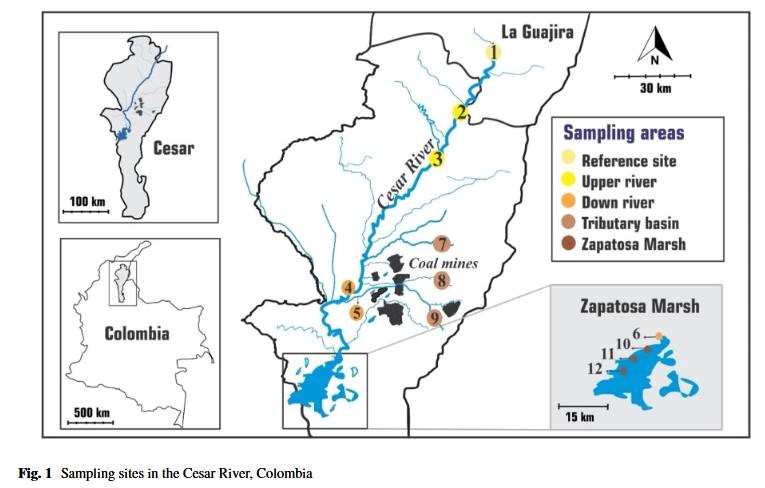
Coal mining is a critical economic for Colombia. However, mineral extraction is usually carried out near rivers that provide ecosystem services to riverside populations. Cesar River receives discharges from several open-pit coal mines, as well as from other anthropogenic sources. The aim of this work was to assess the chemical and the toxicity profile of the sediments from this river. Bottom sediment samples were collected from 12 points along the river, including tributaries and a Ramsar site, the Zapatosa Marsh. Trace elements were quantified employing ICP-MS, and mercury (Hg) was measured using a direct Hg analyzer. Aqueous extracts (K-medium) were obtained from dried sediments (1:3 ratio) and tested using Caenorhabditis elegans, assessing mortality, locomotion and growth as end points. Transcriptional effects associated with various toxicity mechanisms were evaluated using GFP-related transgenic strains (mtl-2, sod-4 and gst-1). Some trace metals enriched along the course of the river, especially Hg and V. Sediment extract-induced lethality was low (1.5–6.4%); however, nematode growth and locomotion decreased downstream the river, showing inhibition rates up to 23.3 and 35.4%, respectively. Extracts from downstream points increased the mRNA expression of tested genes compared to that elicited by the most upstream site, with greater values on stations receiving domestic sewage and mining outputs. Cobalt and lead were positively associated with metallothioneins and gst-1 expression. In short, coal mining areas should be closely monitored for trace-element release and their impact on biota. The Colombian government should implement laws and programs to protect key ecosystems from mining activities, as a commitment to sustainable development goals.